
舞林大会
绝杀后被反绝杀!这支中国女篮无缘4强,已创近10年最佳战绩_我的网站

A |
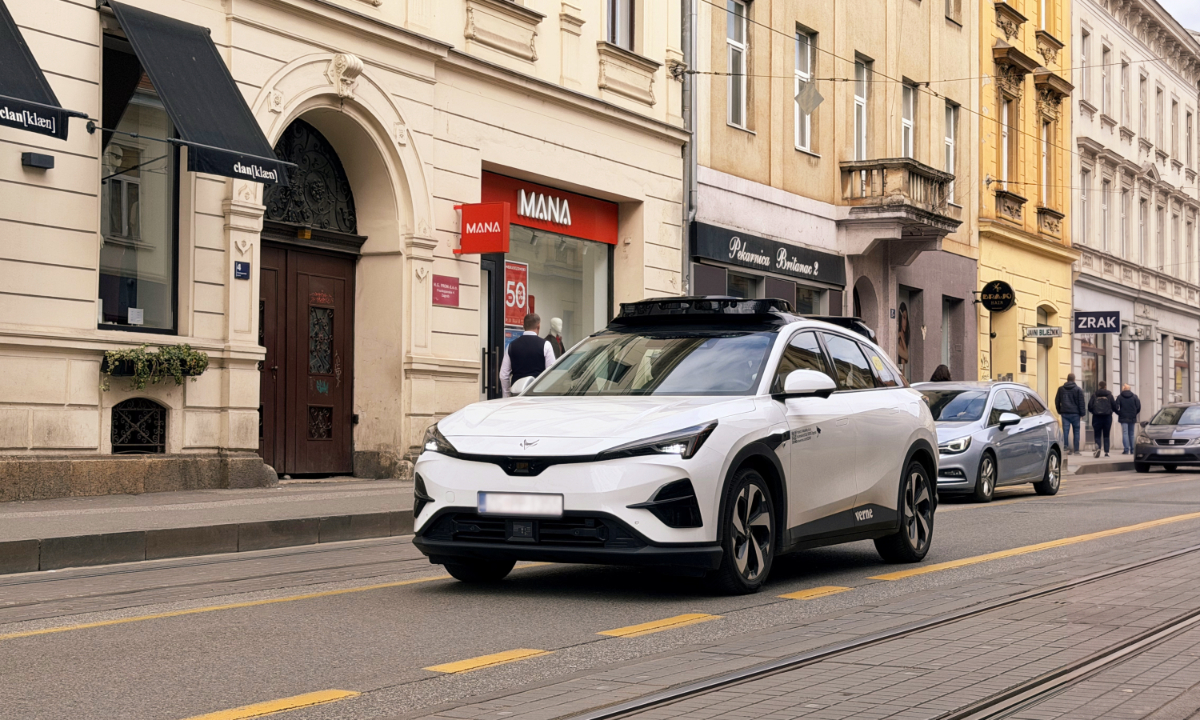
Chinese autonomous-driving company Pony.ai said on Monday that its cumulative autonomous-driving distance worldwide has surpassed 100 million kilometers, marking the latest milestone as China's driverless sector moves from technology validation toward mass production and scaled commercial deployment.
The milestone comes as L4 autonomous driving gains commercial traction across passenger transport and logistics in China, while Chinese companies are accelerating overseas deployment through partnerships with local operators in markets including Europe and Southeast Asia.
Industry experts said that the significance goes beyond rising distance. As commercialization gathers pace, the next phase of competition will increasingly hinge on whether autonomous-driving technology can be deployed at scale, brought down to commercially viable costs and replicated across different transport scenarios and markets.
At a recent media briefing, Pony.ai said that its fourth-generation L4 autonomous electric heavy-duty truck had entered mass production, with commercial operations expected to begin in the coming months. The company plans to deploy 500 to 1,000 trucks over the next two to three years across long-haul freight, bulk cargo transport and port logistics.
A notable part of that transition is the sharp decline in costs. Autonomous-driving hardware costs for Pony.ai's fourth-generation heavy truck are about 70 percent lower than for the previous generation, according to the company.
Similar cost reductions are also emerging in robotaxis. Pony.ai said on its official blog that the bill-of-materials cost of the autonomous-driving kit for its seventh-generation robotaxi has fallen 70 percent from the previous generation, helping the company achieve unit-economics breakeven in Guangzhou and Shenzhen, South China's Guangdong Province.
China's autonomous-driving sector is moving from technology validation to large-scale commercial deployment, underpinned by the rapid accumulation of real-world driving data, Pan Helin, a member of the Expert Committee for the Ministry of Industry and Information Technology, told the Global Times on Monday.
"Continuous road testing allows L4 systems to better adapt to local traffic conditions, laying the groundwork for wider commercial use," Pan said.
China has opened multiple cities to autonomous-driving applications, with commercialization gathering pace. As deployment expands and marginal technology costs fall, autonomous driving is expected to unlock significant commercial value and emerge as a new form of mobility, veteran industry analyst Liu Dingding told the Global Times.
Pony.ai aims to expand its robotaxi fleet to more than 3,000 vehicles by the end of 2026 and operate in 20 cities worldwide, with nearly half of those cities overseas. It also plans to develop an international version of its seventh-generation robotaxi tailored to different regulatory requirements and infrastructure, supporting the deployment of more than 1,000 vehicles in overseas markets.
Pony.ai's ambition also reflects a broader push by Chinese autonomous-driving companies to expand overseas.
On August 3, WeRide announced a partnership with Danish shared-mobility platform GreenMobility to deploy autonomous ride-hailing services in Denmark, marking its first entry into the Nordic region and sixth European market. Subject to regulatory approval, the service is expected to open to the public in the first half of 2027 using WeRide's latest GXR L4 robotaxi.
WeRide said on its website that its autonomous-driving products are now deployed in more than 40 cities across 12 countries. The company holds autonomous-driving permits in eight markets and operates a global L4 fleet of more than 3,000 vehicles.
A similar expansion is taking place in public transport. On July 17, Chinese autonomous-driving company MOGOX announced a strategic partnership with Singapore-based ComfortDelGro Bus. The two companies will cooperate on autonomous-vehicle deployment and operations, commercial expansion and coordination with regulators.
Pan said that China's autonomous-driving sector has two key advantages: a broad supplier base for major components and a large domestic market that allows companies to deploy services widely and accumulate real-world data. Advances in simulation and synthetic-data technologies have further strengthened the sector's ability to train and refine autonomous-driving systems.
Liu pointed to the cost benefits of scale. As deployment expands, the cost of key automotive-grade components such as lidar and chips continues to fall, improving the economics of commercial operations and creating more room for technological iteration, he said.
。

B | 中国队在小组赛中2胜1负,以小组第二名的身份获得了参加淘汰赛的资格。1/8决赛,中国队发挥出色,以23分优势大胜拉脱维亚晋级八强,迎来了与加拿大队争夺四强名额的1/4决赛。全场比赛都在胶着的状态中进行,上半时中国队以30比29领先1分,核心球员李沅珊被对手重点盯防,孙晗昀站出来砍下10分。第三节开始后不久,当值裁判便第4次吹罚孙晗昀犯规,她只好暂时下场,中国队形势危急。

C | 本节中加拿大队反超了比分,领先9分进入到决胜节的争夺。第四节,中国女篮庞云舒内线连得4分,紧跟冯颖、李沅珊连续反击追至3分分差,随后加拿大连续冲框再度领先7分,中国女篮贾驭连续反击再度缩小至3分,加拿大三分命中领先6分,紧跟中国女篮李沅珊迅速连得5分迫近至1分分差,比赛来到最后2分钟,加拿大内线得分领先3分,随后双方持续进攻不中,比赛还剩最后半分钟,中国女篮庞云舒造犯规两罚全中,紧跟加拿大失误中国女篮孙晗昀内线得分反超1分,留给加拿大12.7秒,加拿大二次进攻内线得分反超1分,中国女篮最后1.7秒后场发球超远三分不中,最终中国女篮U17 68-69不敌加拿大女篮U17。这场比赛虽然输了球,但面对北美强队,中国U17女篮的姑娘们敢打敢拼,将胜负悬念保持到了最后一刻并且一度有机会完成逆袭,值得点赞。中国队参加U17女篮世界杯的最好战绩是在2010年,当时获得了第三名。2016年该项赛事,中国队也曾晋级四强。之后的几届U17女篮世界杯,中国队的最好战绩仅为16强,这一次打进八强是时隔10年来取得的最好战绩。
Current article:http://8jaib.loukachunwenghongchuikui.shop/list_cmgx8/bxecz1.html
Published on:07:58:53
 新华社快讯:澳门特区“三五”规划正式公布
 瑞天空:加拉塔萨雷与扎卡初步接触,药厂愿意低价放球员离队
 2026世界机器人大会在北京闭幕,2026世界机器人大会在北京闭幕
 浙江防台风应急响应调整至Ⅱ级
 外交部:中国与柬、泰都是友好邻邦,都开展正常军备合作
 “手机收到7.7级地震预警”,原来是冒用发布!四川、浙江地震局接连打假
- ·开帆船横跨大西洋这件事,我们终究是做到了
- ·欧足联:因凡蒂诺道歉也没用,将继续抵制国际足联
- ·California considers stepping in to manage groundwater basin in farm country
- ·预测佛得角出线、西班牙夺冠,AI怎么“看”球赛?
- ·儿童是否能单独乘火车出行?铁路官方解答
- ·一个普通清洁工,居然是127外国家公司董事?真相揭开,事情大了
- ·Man tries swimming across Yangtze River to Shanghai to save travel costs rescued after 2-hour drift
- ·隐形水印上线,AI写作开始留痕
- ·上海两大国际机场暑运日进货量超千吨 挪威三文鱼“专机”首降浦东,上海两大国际机场暑运日进货量超千吨 挪威三文鱼“专机”首降浦东
- ·苹果旗下天气应用Dark Sky将于2023年停止运营
- ·放出原油储备也压不住,油价会再创新高吗?
- ·“越权且不负责任”,俄美共同批评联大主席贝尔伯克
- ·开勒股份:聘任魏翼丰担任公司董事会秘书
- ·每个月房贷3500,意味着什么?
- ·货拉拉
- ·中国财政部:将及时谋划出台务实管用的增量政策,中国财政部:将及时谋划出台务实管用的增量政策
- ·西装暴徒天花板 哑光黑战斗感拉满!宾利欧陆GT Speed新车型谍照
- ·哈登生涯各队薪资:火箭9季1.735亿 雷霆3季1290万 骑士有望破亿
- ·红米独立,我期待1999元秋龙855性价比手机
- ·China's J-16 fighter crosses swords with Egypt's Rafale jet in first flight day of joint drill
- ·米切尔自曝食谱:每天7-8瓶运动水&健康饮食 最难戒的是小熊软糖
- ·果然财经|车厘子快比草莓便宜了!车厘子草莓最高性价比时刻来临
- ·爷青回!31年经典IP再现,《英雄无敌3》重制版官宣
- ·市税务局“5·15政务公开日”主题宣传活动精彩纷呈
- ·原创 亏大了!累计倒闭上万家,订单暴跌50%,跟团游大坑真没人跳了!
- ·PM to address conference of Law ministers, Secretaries
- ·618多省国补进入“空窗期”国补什么时候彻底结束?确定时间是12月31日截止
- ·官方地图显示,诺基亚N9有望获得一份副本。
- ·古天乐演唱会神秘嘉宾是刘德华,二人唱跳刘德华名曲《独自去偷欢》,古仔唱完抱着华仔不撒手
- ·南通大学杏林学院姜海之星实践团开展“巧手寻非遗,匠心悟文脉”主题实践活动
- ·主场至今一胜难求!中国男篮战黎巴嫩球票价格:VIP最高1880元
- ·一场“议论纷纷”的党课,为何广受好评?
- ·美媒:美国对俄制裁不仅没生效,还损害美国利益,让中印捡了便宜
- ·美丽中国河北行|衡水湖畔,来场观鸟游
- ·外交部:美英澳核潜艇合作问题应由机构所有成员国共同讨论决定
- ·2025年618和国补可以叠加吗?618从6月17日晚8点开始最便宜
- ·涉试图夺取女督察配枪 33岁女子被控后还押心理卫生学院
- ·普斯卡“臀”英冠门将开大脚,却直接被对手用屁股挡进球门
- ·麝香:载人飞船的首次飞行是极其危险和激烈的。
- ·2023年“世界艾滋病日”系列宣传 | 你知道今年“12·1”是第几个“世界艾滋病日”吗?